
The short answer: interior systems manage water, they do not stop it
Interior waterproofing does not keep water out of the soil around your foundation. It gives water that reaches the wall or floor a path to a sump pit, where a pump sends it outside. That is a drainage system, not a seal, and it works well when the water is groundwater.
The main alternative is exterior waterproofing, which digs down along the wall and seals it. That is more thorough and much more disruptive, so many owners try the interior route first. The right choice depends on how the water enters and what the budget allows.
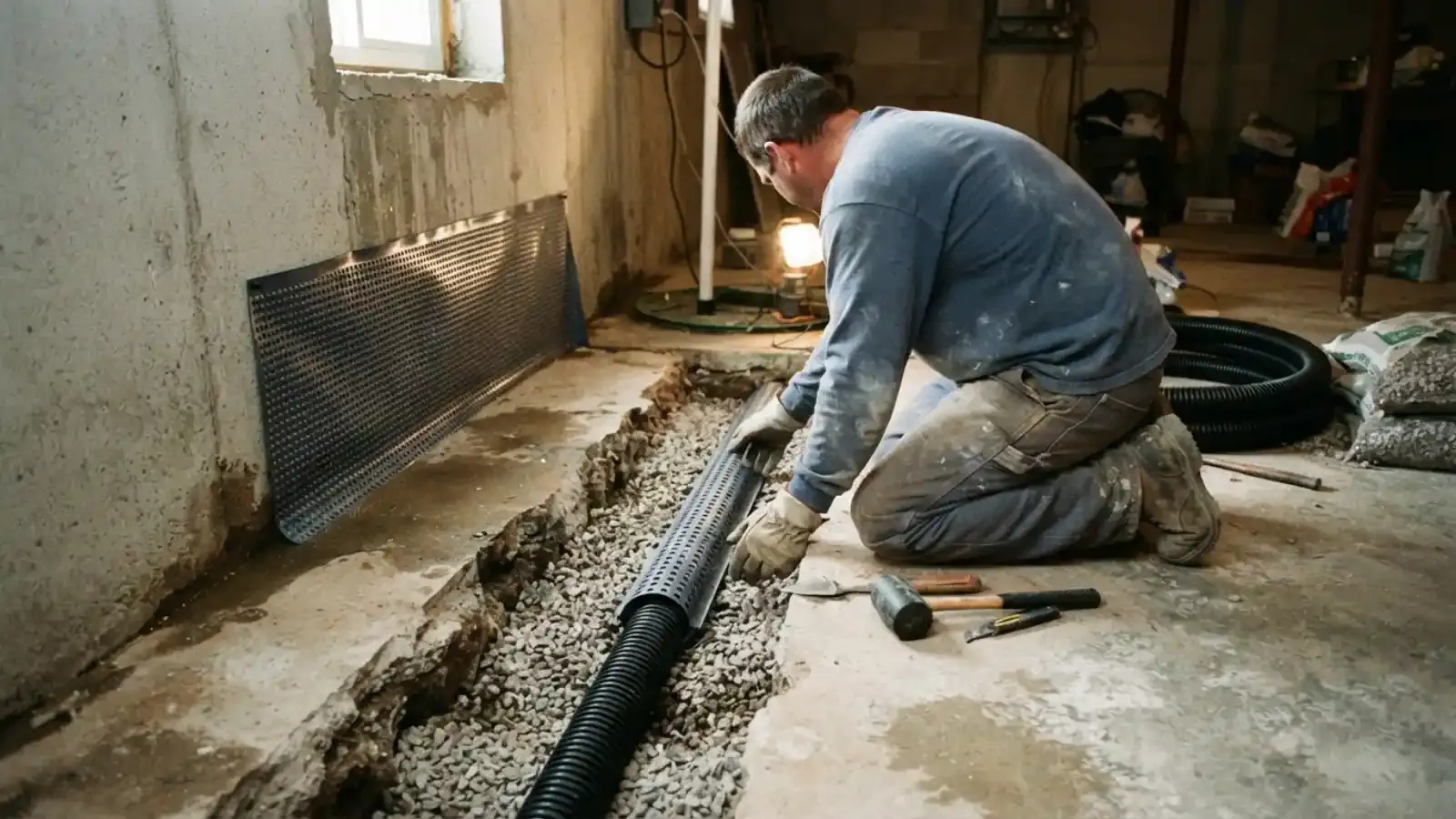
What an interior drain installation involves
The sequence is similar from house to house.
- Open the floor along the wall. A strip of concrete is cut and removed around the perimeter where water enters.
- Lay drain pipe in gravel. Perforated pipe sits in stone and slopes toward a pit.
- Install the sump pit and pump. The pit collects water, and the pump discharges outdoors.
- Patch the floor and test. New concrete is poured, and the system is tested with water.
Wet cellar after every storm?
Call for a walk-through that finds the cause first.
What interior systems can and cannot do
Match the system to the problem.
| Problem | Interior drain and pump | Notes |
|---|---|---|
| Groundwater seeping at the floor edge | Yes | The usual case |
| Water through the middle of a wall | Partly | Wall channels may help |
| Active crack with heavy flow | Manages, does not stop | Exterior repair may be needed |
| Humidity and musty smell | Not a fix | Dehumidify and ventilate |
| Plumbing leak | No | Find and fix the pipe |
Cheaper steps to take first
Before you open the floor, check the basics. Clean gutters, extend downspouts at least several feet from the foundation, and regrade the soil so it slopes away from the house. Seal window wells and keep them clear of debris. These steps can solve the problem, and they cost little.
If the cellar still takes on water, an interior drain is a reasonable next step. A battery backup for the pump protects you during storm outages, as explained on our sump pump installation and repair page.
Questions for any contractor
Ask where the water will go, how the pump will be powered during an outage, what warranty applies and what voids it. Ask how many similar jobs they have done on houses like yours. Be wary of a contractor who recommends the most expensive system without testing for a plumbing leak first.
How the drain and pit work together
Water that enters a basement tends to appear where the wall meets the floor, since that joint is the weakest point in a poured foundation. A drain channel at the edge catches the water before it spreads. The channel slopes toward a sump pit, which collects the flow so the pump can lift it outdoors.
The system depends on the pump and on power. A pump that fails or an outage during a storm leaves the drain full and the water rising. That is why a backup pump or a battery system belongs in any plan, and why a high-water alarm is cheap insurance.
Maintenance is simple. Check the pit each season, clear any silt, test the float and watch that the discharge runs freely. Gunk in the pit shortens pump life, and a sticky float is the usual reason pumps fail on the day they are needed.
What interior work cannot do
Interior drainage does not repair a failing wall. If a foundation is bowing, sinking or cracking in a way that suggests movement, a drain only manages the water, and a structural engineer should look at the cause. Water in the wall also leaves salts on the surface, which a drain does not remove.
Interior systems also do not control humidity. A cellar can be dry underfoot and still feel damp in summer. A dehumidifier and ventilation handle that problem, and they work better once liquid water is under control.
Planning the project around the seasons
Interior drainage work is easier when the ground is not frozen and the cellar is dry enough to cut the floor. Late summer and early fall are common choices. Spring is when the problem shows itself, but contractors are busiest then, so booking in the quiet months can save waiting.
Ask how the contractor protects belongings during the job. Cutting concrete throws dust, and the work area needs sheeting and a clear path for equipment. Move stored items out of the cellar before the plumber arrives, and keep the water heater and furnace accessible.
A realistic expectation for results
A well-designed interior system keeps the floor dry in most storms, but it will not stop all dampness. Walls may still show salt stains, and humidity can remain high in summer. Set expectations before the work starts, so a dry floor with a musty smell does not feel like a failed job.
Ask the contractor to describe what a normal result looks like, and agree on how to judge it after the first heavy rain.
Derry notes for interior drainage
Rockingham County has flood or storm declarations on record for May 2006, April 2007, July 2008 and March 2010, plus Tropical Storm Irene in 2011. The regional planning commission lists them as county events, so treat them as a reminder that heavy rain years happen.
Derry's code enforcement office at 603-432-6148 can tell you whether a permit applies to a new sump pit or a drain connection. Sump discharge should go outdoors, and connecting it to a sanitary sewer is generally not allowed, so confirm with the town.
Sources: Rockingham Planning Commission regional plan hazard history. derrynh.gov code enforcement contact.
Nearby towns
The same approach works in Windham and Salem. Our basement waterproofing page describes the full service.
Frequently asked questions
It manages liquid water. Humidity and condensation need ventilation or a dehumidifier.
It is heavy work that involves cutting concrete. A plumber or waterproofing contractor handles the pit, pump and discharge.
Many installations take a few days, depending on the length of the wall and the floor repair.
If your cellar floods when the power fails, yes. It is the most useful addition to any pump system.
It is generally not allowed. Check with the town before connecting.
Keep the cellar dry
Call for basement waterproofing in Derry.