
Water where it should not be: act now, locate later
Active water through a ceiling, a wall or a floor is an emergency. Close the main shutoff, open a low faucet to drain the lines and switch off power to any wet circuits at the panel if you can do so safely. Then call the 24/7 line, and the plumber will find the source before any wall is opened.
Even a hidden leak with no stain yet deserves a call when something changes, such as a sudden jump in the water bill, the sound of running water when everything is off, or a warm spot on the floor. Slab leaks on hot lines are often discovered because the floor is warm underfoot.
- Water stains spreading on a ceiling or wall.
- The sound of running water when every fixture is off.
- A warm patch on a floor over a slab.
- A water bill much higher than usual with no change in use.
- Damp carpet or buckling flooring.
A simple test you can do with the water meter
Your water meter is the quickest leak detector in the house. This test tells you whether water is moving through the system when it should not be.
- Turn off every fixture. Make sure no one is using water, and the dishwasher, washer and ice maker are idle.
- Read the meter. Note the position of the leak indicator or the digits and take a photo.
- Wait fifteen minutes. Do not use any water.
- Read it again. If the meter moved, water is leaking somewhere between the meter and the fixtures. Call and tell the dispatcher what the meter showed.
Meter moving with everything off?
Call the 24/7 line and describe what the meter showed.
How the plumber finds a hidden leak
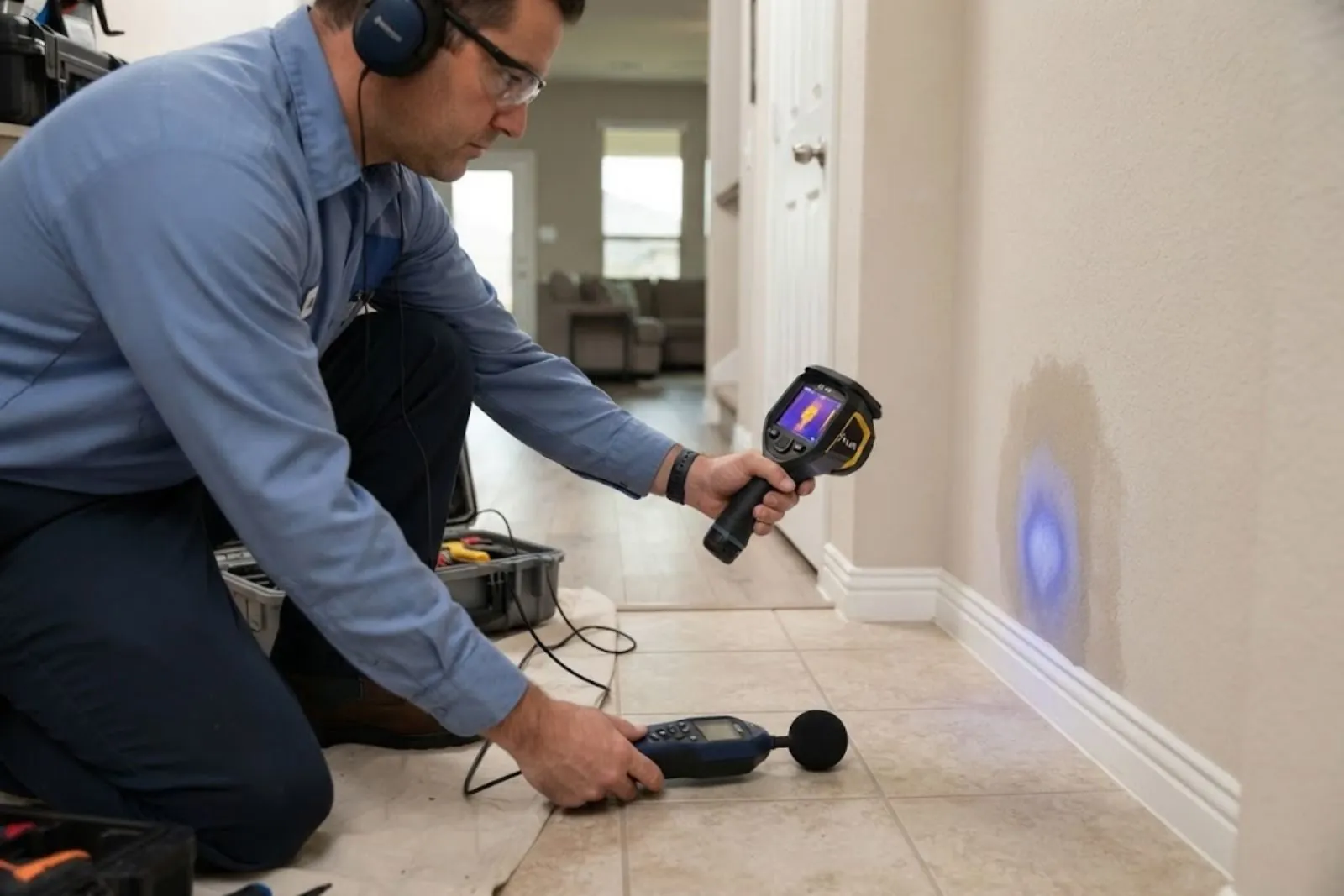
Finding a leak is a process of elimination. The plumber starts with the meter test and a pressure test on the supply lines, then listens with electronic equipment for the sound of water escaping. Thermal imaging can show a warm line behind a wall or under a floor, and a moisture meter shows how far the water has spread.
A leak on a drain line is different, because drains only carry water when a fixture is in use. In that case the plumber runs water and watches with a camera, as described on our sewer inspection page. A leak on the line from the street to the house is another case entirely, and the water service line repair page explains it.
Where leaks hide and how they show up
Different locations leave different clues.
| Location | Clue | Typical approach |
|---|---|---|
| Wall or ceiling | Stains, bubbling paint | Moisture mapping, then a small opening at the source |
| Under a slab | Warm floor, a high bill, the sound of running water | Pressure test, listening gear, then a repair or reroute |
| Outdoor line | Wet ground, a soft lawn, low pressure | Locate and excavate the section |
| Fixture supply | Dripping under a sink or behind a toilet | Replace the valve or connector |
| Hot water line | Warm spot, hot water that is slow to arrive | Isolate the line, repair or replace the section |
Reading a high water bill
A high bill with no change in habit is a reason to test for a leak. A running toilet can waste a surprising amount of water, and so can a leak in an irrigation line or a dripping outdoor spigot. Compare your usage with previous months and ask the Derry Water Department at 603-432-6147 about meter readings if you are on town water.
On private wells, a leak shows up as a pump that cycles more often or a pressure tank that never rests. Houses in Hampstead, Chester and parts of Windham and Londonderry on wells will notice it in the electric bill rather than the water bill.
Winter leaks and the cold months
Freezing weather increases the risk of pipe splits that only leak after the thaw. A pipe that froze overnight can be fine until the ice melts, and then water appears. If you suspect a frozen line, read our burst pipe repair page before you apply heat, and call if a pipe is split.
Insurance claims for sudden pipe leaks usually go better with documentation. The plumber can supply moisture readings and photos of the damage, and you should keep receipts for any emergency work.
Leak Detection questions in Derry
Yes. The line is open 24/7. Close the main shutoff, open a low faucet and call (603) 815-9179. The plumber begins by finding the source so that repair can follow quickly.
Warm spots on the floor, the sound of running water, a high water bill and low pressure are signs. The meter test helps. Only a pressure test and listening gear can confirm it, which is why you should call a plumber.
Not at first. The plumber narrows the location with tests and equipment, then opens a small section at the source. The aim is the smallest hole that gets the job done.
It might be. Run the meter test and check toilets for running. If the meter moves with everything off, a leak is likely. A plumber can find where.
Policies differ. Many cover sudden bursts and not slow leaks or wear. Ask your insurer before you rely on coverage, and keep photos and receipts.
References: Derry Water Department, 603-432-6147, for meter questions on town water. NH DHHS and NHDES private well advice for well owners.
Find the leak before it finds your ceiling
Call any hour for leak detection in Derry.