
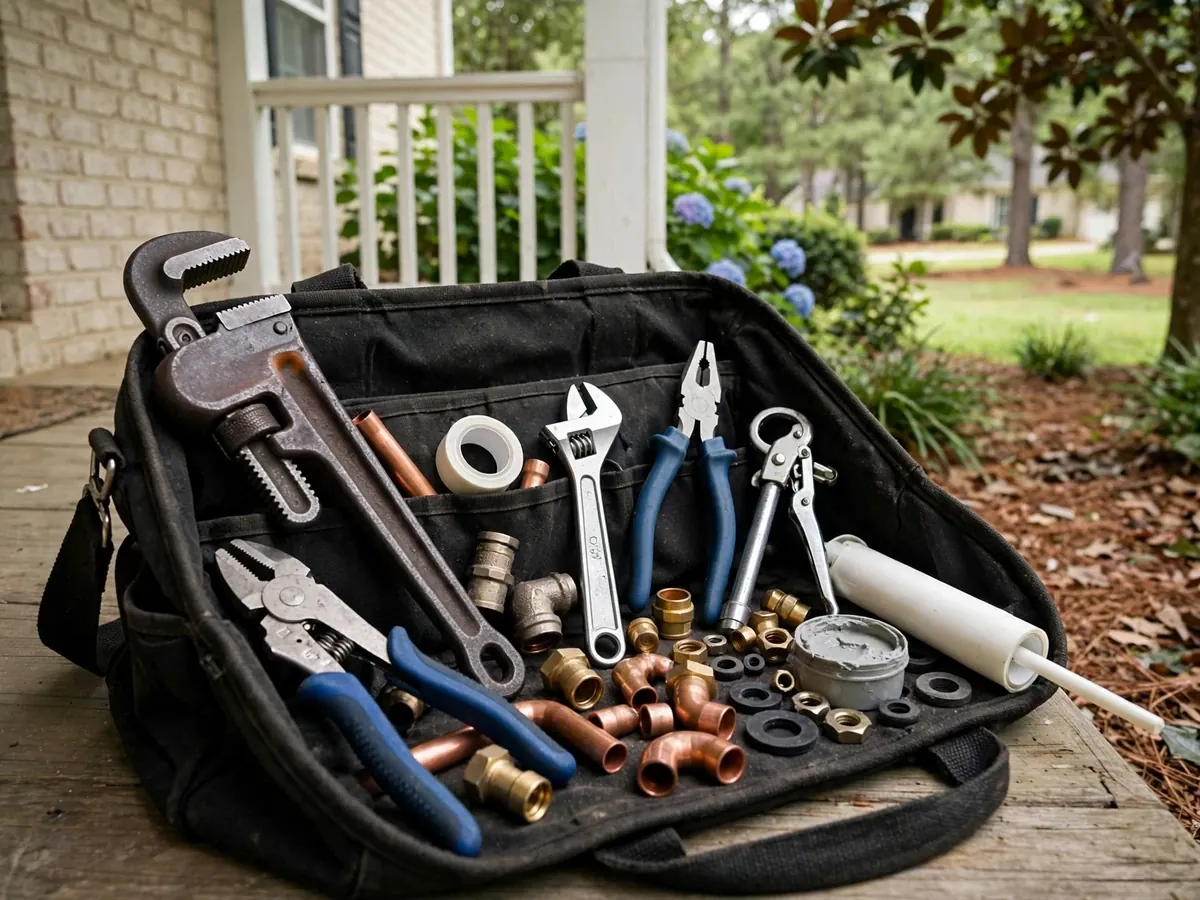
The short answer: a cap is fine if the pipe is sound and the water is off
Capping seals the end of a pipe so water cannot escape. It is used after removing a fixture, abandoning a line or isolating a leak. A properly seated cap on a sound, clean pipe holds. A cap on a corroded, out-of-round or scratched pipe leaks, sometimes weeks later.
Most capping problems come from skipping the prep. The pipe must be shut off and drained, the end must be cut square, and the surface must be clean and smooth. That is the difference between a cap that lasts and one that drips behind a wall.
Cap types and where they fit
Choose by the situation, not by price.
| Cap type | How it seals | Best for | Caution |
|---|---|---|---|
| Soldered (sweated) copper cap | Solder bonds the cap to the pipe | Permanent abandonment inside a wall | Needs a dry pipe and a torch |
| Push-fit cap | A gripping ring and O-ring seal the end | Quick, tool-free capping where the pipe is clean | The O-ring needs a clean, square pipe end |
| Compression cap | A nut squeezes a ferrule against the pipe | Accessible capping that may be reopened | Needs access to tighten |
| Threaded plug on a fitting | Screws into a threaded fitting | Temporary caps | Thread sealant must be applied correctly |
Capped line leaking?
Shut off the supply and call if water is coming through a wall.
How to cap a copper pipe correctly
Take it in order. Most failures come from the first two steps.
- Shut off and drain. Close the supply valve and open a low faucet. A pipe with water in it cannot be soldered.
- Cut square and deburr. A tubing cutter gives a square cut, and a deburring tool smooths the edge.
- Clean and inspect. Remove dirt and oxidation, and look for dents or scratches where the O-ring will sit.
- Seat the cap and test. Push the cap fully on, mark the depth, then open the supply slowly and check for drips for several minutes.
When to call a plumber instead
Call a plumber if the pipe is corroded, if you do not know which line it is, if the pipe sits in a wall you cannot see, or if the shutoff valve will not close. Also call if a line has been cut in an old house, since older copper can be hard and brittle at the joint. A capped line that leaks inside a wall causes damage before anyone notices.
If you find a stubby capped line in your cellar, ask why it was capped. Our plumbing installation page explains how abandoned lines are handled during remodels, and the leak detection page explains how hidden leaks are found.
Common mistakes that make a capped pipe leak later
The most common mistake is capping a pipe that still has water in it. Water prevents solder from flowing and it turns to steam under a torch, which blows the joint apart. Another mistake is forcing a push-fit cap onto a pipe end that was cut at an angle. The O-ring cannot seal against a sloped edge.
A third mistake is reusing a cap. Push-fit and compression caps have seals and rings that deform when installed, so a removed cap should be replaced. Finally, people forget to test. Open the supply slowly and watch the cap for several minutes, because a slow weep may take that long to appear.
What a pro does differently
A plumber looks at the whole line. Before capping, the plumber checks whether the pipe feeds anything else, confirms the shutoff controls only the part you expect and looks for corrosion further back. A cap on a line that still feeds a hose bib or an ice maker is a trap for the next person.
The plumber also labels capped lines when they remain accessible, so a future owner knows what they are. If the line runs inside a wall, the plumber may cut it back to a point where the cap sits near the main line, which avoids dead legs that hold stale water.
Capped lines and future work
A capped line that is still in a wall can cause trouble years later, when a remodeler opens the wall and finds a surprise. Photograph the cap before the wall is closed and note its location on a sketch of the cellar. Keep the sketch with your house records.
If you are selling the house, a buyer's inspector may ask about capped lines. A clean, accessible cap with a clear record is easier to explain than a mystery pipe.
Derry notes for pipe work
Derry's code enforcement office at 603-432-6148 can tell you whether pipe changes in your home need a permit or inspection. Inspections need 24 hours' notice.
The Derry Water Department reported in its 2025 lead service line inventory that of 4,466 lines, none were classified as lead and 20 were galvanized lines requiring replacement. That is the service line outside your house. Inside, copper is common in many Derry homes, but older homes may still have galvanized pipe. Check what you have before you cut or cap.
Sources: derrynh.gov code enforcement. Derry Water Department lead service line inventory 2025.
Related pages
If the capped line is the result of a burst, see our burst pipe repair page. Homeowners in Hampstead and Chester on well systems should also tell the plumber, because pressure tanks react to any change in the plumbing.
Frequently asked questions
Yes, with a push-fit or compression cap. Both rely on a clean, square pipe end. If the pipe is corroded or out of round, soldering or replacing the section is better.
Many are rated for permanent use, but check the packaging and local rules. Do not bury a cap inside a wall unless it is approved for that use.
The pipe end may be rough, scratched or out of round, or the cap may not be fully seated. Shut off the supply and re-do the cap, or call a plumber.
No. Gas lines need licensed work and specific fittings. Call a plumber or the gas utility.
Minor work may not need a permit, but a larger change might. Call code enforcement at 603-432-6148 if you are unsure.
Pipe work done once and done right
Call for pipe repair in Derry.