
The short answer: repeat problems point to the pipe, not the clog
One clog is bad luck. A drain that clears and then backs up again within weeks, in the same part of the house, suggests the pipe itself is damaged. Cracks, offset joints, a sagging section or roots at a joint all catch debris and rebuild blockages quickly.
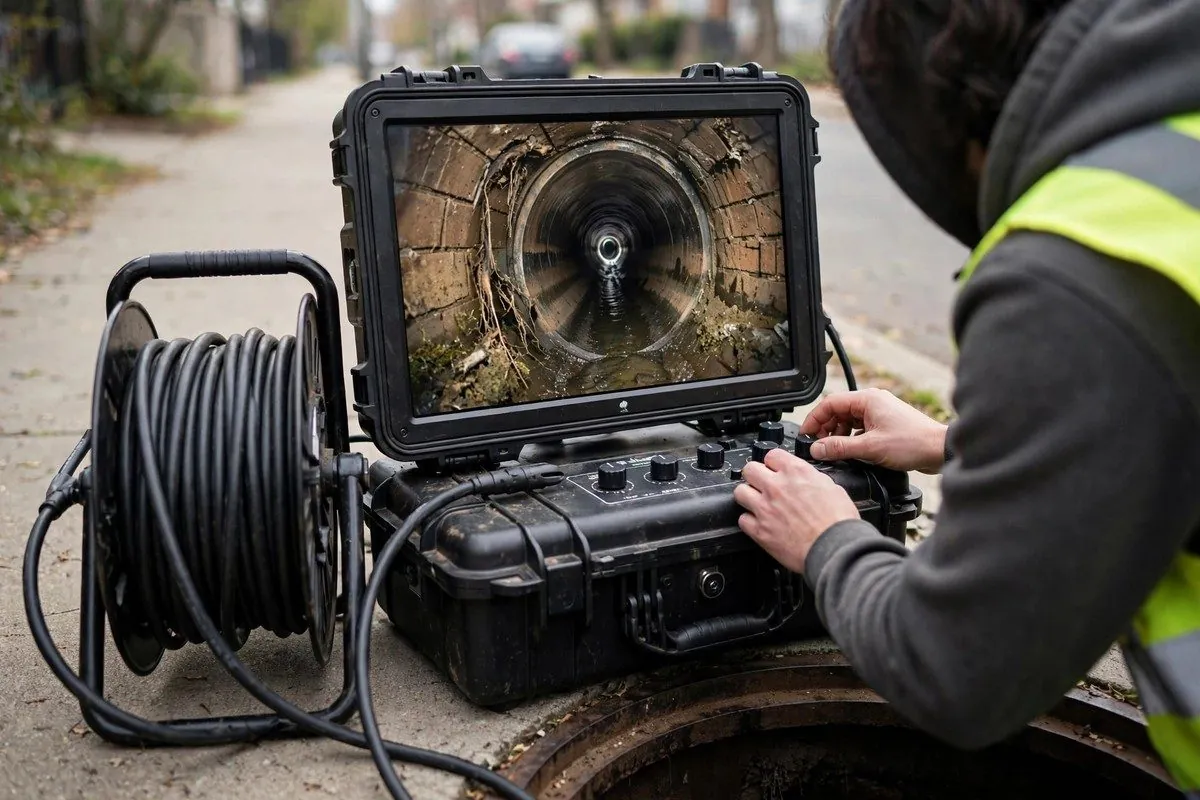
A camera inspection settles it. The footage shows the inside of the line and the distance to any damage, so you can choose between cleaning, spot repair, lining or replacement with real information.
Signs that point to a damaged line
Several of these together are a stronger warning than any one alone.
- More than one fixture drains slowly or gurgles.
- Sewage smell in the yard or cellar.
- A sunken or unusually green stripe in the lawn above the line.
- Clogs that return soon after a cable visit.
- Cracks in a slab or foundation near where the line exits.
- Rodents or insects entering from the drain area.
Repeat clogs in the same drain?
Call and ask about a camera inspection.
Clog or damage? A quick comparison
Use this to decide which page to read next.
| Observation | More likely a clog | More likely damage |
|---|---|---|
| Only one sink is slow | Yes | Unlikely |
| Every drain is slow | Possible | Yes, if it keeps happening |
| Clears after snaking and stays clear | Yes | No |
| Clears and returns in weeks | Unlikely | Yes |
| Lawn sinks above the line | No | Yes |
What damage usually means
Cast iron pipes scale and crack with age, clay pipes separate at joints, and plastic pipes can sag if the trench was not compacted. Roots find any gap and expand it. In older neighborhoods, a lateral may be the original pipe that is many decades old.
The camera shows which of these you have. See our sewer inspection page for what the footage reveals, and the sewer line repair page for the fixes.
What to do if you suspect damage
Start small and escalate only when the evidence supports it.
- Note the pattern. Write down which fixtures are slow, when it started and how often it returns.
- Clear the line once. A sewer line cleaning visit opens the pipe so the camera can see.
- Camera inspection. Ask for the footage and the distance to any damage.
- Compare repair options. Spot repair, lining and replacement suit different damage, and a clear price comes before any digging.
What the camera footage shows when a pipe is failing
Healthy plastic pipe looks smooth and round with tight joints. A damaged line shows cracks along the top, joints that have shifted so one pipe edge sticks into the flow, or a low spot where water sits. In clay and cast iron the camera finds rough scale, missing chunks and gaps where roots hang like hair.
Roots are a sign of leakage as well as a cause. They only enter where moisture escapes, so a mass of roots tells you the joint is open. Cutting them restores flow for a while, but the opening remains, and the roots return until the joint is repaired.
A sag, sometimes called a belly, holds water and waste, and the footage shows a pool where the pipe should be dry. Cleaning improves flow briefly. Only regrading or replacing that section stops the pattern.
What to ask before you approve a dig
Ask to see the footage and the distance to each defect. Ask whether the damage is limited to one section or runs the length of the line. Ask whether the repair needs a permit and who arranges it, and what will be done to your lawn, driveway or slab afterward.
Get the scope and the price in writing, and ask what the warranty covers. If the quote seems far larger than the damage on the video, get a second opinion with the same footage. A second plumber can compare quotes from the same evidence.
Why early action costs less
A small crack lets a little water escape and a few roots enter. Over seasons, the roots grow and the crack widens. By the time the line collapses, the soil around it has washed away, and the repair is larger than it would have been.
Acting on early signs also gives you choices. A camera inspection when the line is only partly damaged may lead to a spot repair or a lining job, which disturb the yard less than a full replacement.
A note about home purchases
If you are buying a house with an older sewer lateral, ask the seller about past backups and repairs. Include a camera inspection in your due diligence, and keep the footage. If the video shows a defect, you can negotiate before closing instead of paying for the repair afterward.
Derry notes on sewer lines
Derry was settled in 1719 and incorporated in 1827, and the village areas of Derry and East Derry include some of its oldest housing. Older homes are the most likely to still have original sewer laterals, though a camera is the only way to know.
Some Derry streets are not on town sewer. Homes on a septic system have a different arrangement, where a full tank can look like a damaged line. Confirm with the town which service your street has before you assume. Call 811 before any digging so utilities are marked.
Sources: Derry town history and community profile. NH 811 requirement.
Nearby towns
The same signs apply in Londonderry and Salem, where older neighborhoods have original laterals too. We run camera inspections across all six towns we serve.
Frequently asked questions
No. Cracks and offsets get worse with ground movement and roots. Cleaning helps temporarily but does not repair the pipe.
A camera records the line, and a locator above ground marks the depth and path. The plumber gives you the distance from the cleanout.
No. It can also come from a water service line leak or settled fill. A plumber checks both.
A collapse needs prompt action. A small crack may wait, with monitoring, while you plan. The plumber explains the risk.
Ownership varies. The portion in the public way is usually the town's, and the portion on your property is yours. Confirm with the town.
See the pipe before you pay for a repair
Call to schedule a sewer camera inspection in Derry.