
The short answer: test the meter before you test the soil
Water at a foundation comes from one of three places. It can be a leaking supply or drain pipe, groundwater pushing through the wall or floor, or surface water that grading and gutters failed to move away. A plumbing leak runs whether it has rained or not, while groundwater and surface water follow the weather.
That difference gives you a simple first test. If the cellar is wet during a dry week, suspect a pipe. If it is wet only after storms or snowmelt, suspect drainage. The water meter then confirms or rules out a supply leak in fifteen minutes.
The meter test for a supply leak
You need a dry stretch and the ability to stop all water use in the house.
- Stop all water use. Make sure nobody is running a tap, a washer, an ice maker or a humidifier.
- Read and photograph the meter. Note the leak indicator, if it has one, and the digits.
- Wait fifteen minutes. Use no water at all.
- Read again. Any movement means water is flowing somewhere. Call the plumber and give the readings.
Wet cellar and no idea why?
Call and start with the meter test.
Where foundation water comes from and what it looks like
The pattern of the wetness is a clue.
| Source | Typical pattern | Typical fix |
|---|---|---|
| Supply line leak | Constant dampness, a hissing sound, a meter that moves | Locate and repair the line |
| Drain line leak | Dampness near a fixture or stack, smell | Camera and repair the drain |
| Groundwater | Wet floor edge after storms, efflorescence on walls | Interior drain and sump pump |
| Surface water | Wet wall below a downspout or low grade | Gutters, downspouts, grading |
| Condensation | Beads on cold pipes in humid weather | Insulate pipes, dehumidify |
What the plumber does with the tools
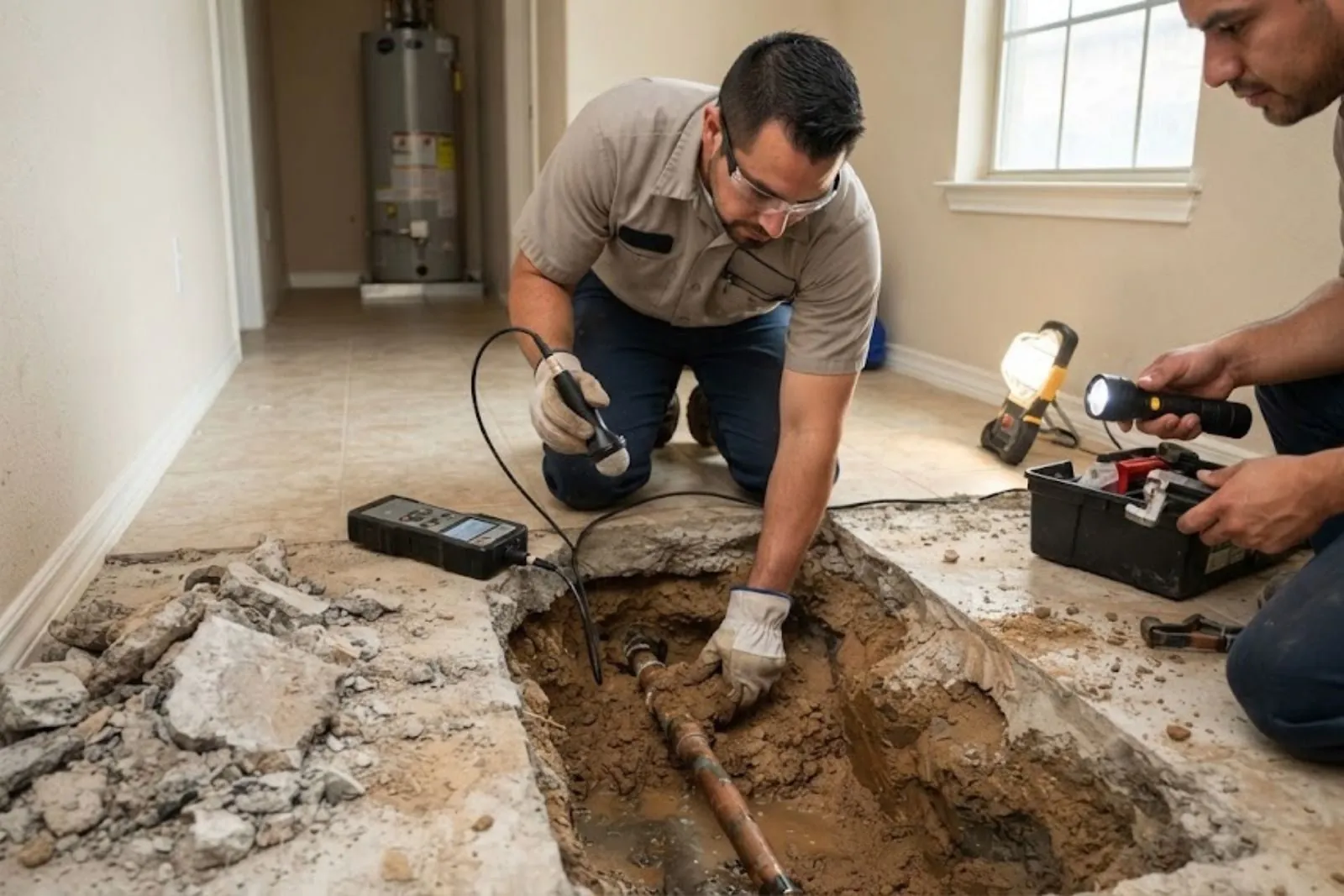
After the meter test, the plumber pressure tests the supply lines, listens with electronic equipment and checks the drain lines with a camera. Thermal imaging can reveal a warm line under a slab. Moisture meters show how far the water has spread.
These steps narrow the search before anything is opened. If the leak is in the supply line under the slab, the repair may be a reroute through the walls instead of breaking up the floor. Our leak detection page describes the process, and the basement waterproofing page covers groundwater.
When it is groundwater
If the meter does not move and the cellar is wet after storms, the water is coming from outside. The cheapest fixes come first. Clear the gutters, extend the downspouts, regrade the soil so it slopes away and seal window wells. If water still arrives, an interior drain along the wall and a sump pit and pump manage what is left.
Do not pay for interior sealing paint or injection alone to stop active seepage, because the water pressure outside will defeat a thin coating. Ask the contractor how the water will leave the house, not only how the crack will be covered.
Signs that a leak is under the slab
A leak under a concrete slab may show as a damp or warm patch on the floor, a hissing sound at night or a meter that keeps turning. Carpet over a slab can grow musty, and baseboards can swell. A hot water line leak under a slab can make part of the floor feel warm underfoot.
These signs deserve a test, not a guess. Slab leak repair can mean breaking the floor, rerouting the line through walls or attic space, or relining the pipe. The plumber explains each approach once the location is confirmed, and you see the price before work begins.
Gutters, grading and window wells: the quiet culprits
A surprising amount of foundation water begins on the roof. A clogged gutter spills over at the edge, and the water lands against the foundation. A downspout that ends beside the wall pours hundreds of gallons into the soil during a storm.
Grading matters as much as gutters. Soil should slope away from the foundation for several feet, and window wells should drain freely. Fixing these basics is inexpensive compared with interior systems, and they often change a wet cellar into a dry one.
Documenting the problem for a plumber
Take dated photos of wet areas, note the weather on the days the water appears and record the meter readings from the test. Mark the edge of the damp area with tape so the plumber can see whether it grows. Notes like these save time on the first visit.
If you suspect the supply line, say so when you call. If you suspect drainage, mention which walls get wet first.
Derry notes for foundation water
Beaver Lake covers about 134 acres, with a maximum depth of about 14 meters, according to the state environmental agency. Homes near the lake and near other ponds and brooks in Derry tend to sit closer to the water table, and spring thaw can raise it for weeks.
The regional planning commission lists flood or storm declarations for Rockingham County in May 2006, April 2007, July 2008 and March 2010, and Tropical Storm Irene in August and September 2011. Those entries describe the county, not any single Derry street, but they show that heavy rain years happen. A working sump pump matters in those years.
Sources: Beaver Lake facts from the NH Department of Environmental Services 2019 Beaver Lake data summary. Rockingham Planning Commission regional plan hazard history.
Next steps
If you have a damp foundation in Windham near Cobbetts Pond or in Hampstead near its ponds, groundwater is the likelier cause. Our sump pump page explains what to install.
Frequently asked questions
A slab leak usually shows warm spots, the sound of running water and a moving meter. Groundwater follows rain. A plumber's pressure test and listening gear confirm.
Policies differ. Many cover a sudden pipe burst but not groundwater seepage. Ask your insurer before you rely on coverage.
No. Many hairline cracks are cosmetic. Active water through the crack or a widening crack deserves attention.
Exterior excavation and membrane work is the most thorough fix for a failing wall, and the most disruptive. Interior drainage is often tried first.
Homes near any water body may have higher groundwater. It varies by lot, so a sump pump and a basement check are sensible precautions.
Find the source before paying for a fix
Call for leak detection in Derry.