
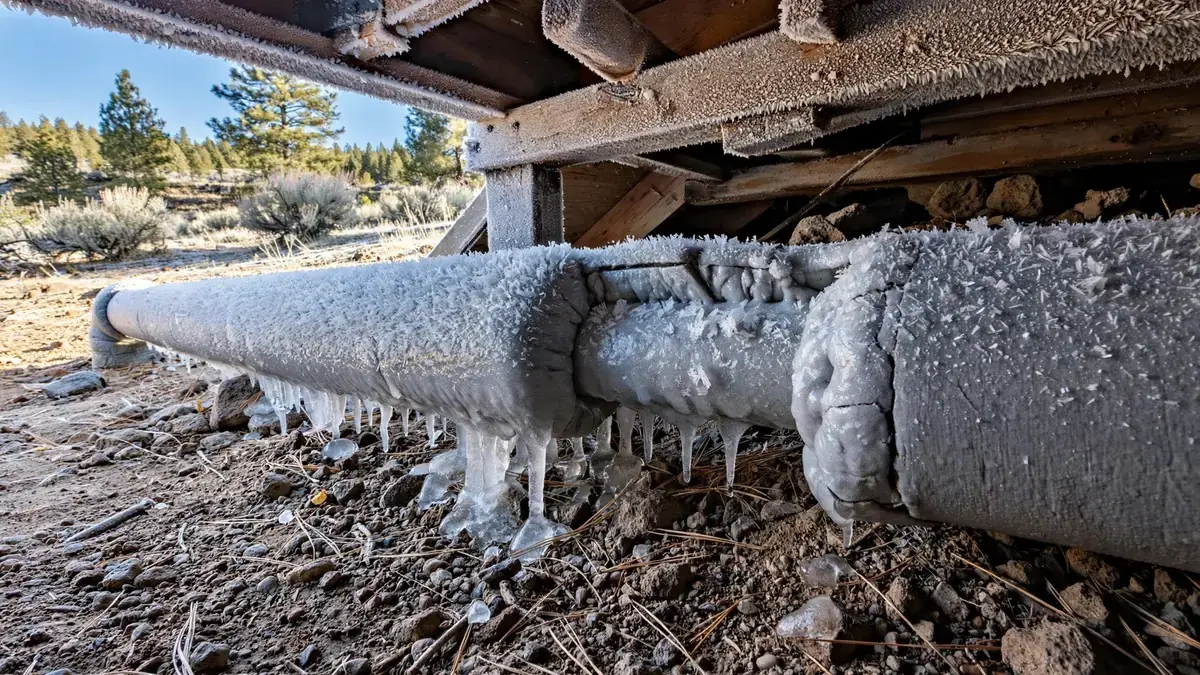
The short answer: open the tap, warm the pipe gently, call if it splits
If no water comes from a faucet in freezing weather, a pipe is probably frozen. Open the tap so melting water can escape, and warm the pipe slowly from the faucet end back toward the frozen section. A hair dryer, a heating pad or warm towels work, and an open flame never does.
If you see a split, a bulge or water, close the main shutoff and call. A pipe that is split will leak when the ice melts. Our burst pipe repair page walks through those emergency steps.
How to thaw a frozen pipe safely
Take it step by step, and keep the tap open.
- Find the frozen section. Check exterior walls, cellars and under sinks. Frost on the pipe or a cold spot gives it away.
- Open the nearest tap. Water needs somewhere to go as the ice melts.
- Apply gentle heat. Use a hair dryer or warm cloths, starting near the tap.
- Check for leaks as it thaws. Keep watching, since a crack may only show as the water flows.
Pipe frozen and no water?
Open the tap and call if you cannot reach it.
Where pipes freeze first
Check these spots before the first hard freeze.
| Location | Why it freezes | Fix |
|---|---|---|
| Exterior walls | Little insulation between the pipe and the cold | Insulate, or move the pipe |
| Cellar near a rim joist | Drafts through gaps | Seal and insulate |
| Garage or breezeway | Unheated space | Heat tape, insulation, or reroute |
| Outdoor spigots | Water left in the line | Disconnect hoses, use frost-proof spigots |
| Crawlspace | Open vents and cold air | Insulate and seal |
Prevention that works
Keep the heat on at a modest level even when you travel. Open cabinet doors under sinks on exterior walls. Let a faucet drip on a line that has frozen before. Insulate exposed pipes with foam sleeves and seal drafts around pipes where they pass through walls.
Know where your main shutoff is before an emergency. A valve you cannot find or close costs minutes when you cannot spare them. A plumber can test it and replace it if it sticks.
After the thaw
A pipe that froze once will freeze again unless the cause is fixed. Ask the plumber about rerouting a line out of an exterior wall, adding insulation or installing heat tape. If you find a stain or a drip after the thaw, our leak detection page explains how to find the source.
Why freezing does not always mean a burst
Water freezes from the cold side inward, and an ice plug forms in the pipe. The pressure that builds between the plug and the closed tap is what splits the pipe. A pipe with a tap open has somewhere to relieve pressure, which is why opening a tap on a suspect line is wise.
The pipe may survive the freeze and fail on the thaw, or it may fail at the first ice plug. Copper splits in a long slit, PEX is more forgiving, and plastic fittings crack. You cannot tell from outside, so watch the pipe as it thaws and keep the main shutoff within reach.
What to do if you lose heat for a long time
If the power or the heat fails for hours in freezing weather, shut off the water at the main and drain the system by opening taps at the lowest and highest points. A drained system cannot freeze and split. Switch off the water heater before draining so it does not run dry and burn out.
Open cabinet doors, close off unused rooms and keep warm in one room. When the heat returns, open the main slowly, check for leaks at every fitting and watch the meter. If anything leaks, close the main and call the 24/7 line.
A short pre-winter checklist
Before the first hard freeze, disconnect and drain garden hoses and close the interior shutoffs to outdoor spigots. Look at the cellar for gaps around pipes where they pass through the foundation and fill them with sealant or foam. Check that insulation on pipes in unheated spaces is intact and tight.
Know where your main shutoff is and test that it closes. Learn which rooms sit on exterior walls and which sinks share those walls. Put a flashlight, a bucket and a few towels near the shutoff so you can act quickly if a pipe splits.
If you plan to be away, ask a neighbor to check the house each day in cold weather. A quick walk-through can catch a cold house before a frozen pipe becomes a flood.
Warning signs before the freeze
Slow flow from a faucet on a cold morning means ice may be forming. A faucet that sputters or gives only a trickle on an exterior wall deserves attention before the next cold night. Open the cabinet under that sink and feel the pipe.
Act early. A pipe that is cold but not yet solid is easier to protect than one that has frozen hard.
Derry notes for cold weather
Rockingham County has an ice storm declaration on record for January 7, 1998, and a winter storm declaration for December 11, 2008, according to the regional planning commission. Power outages in those storms can stop heat and leave pipes unprotected, so plan for blackouts as well as cold.
The Derry Water Department at 603-432-6147 can tell you who to call about a frozen service line outside the house. Frozen service lines on the street side are the department's concern, while the pipe inside your house is yours.
Sources: Rockingham Planning Commission regional plan hazard history. derrynh.gov water department.
Related towns and pages
Rural properties in Chester and Hampstead have long runs of pipe that freeze easily, especially to outbuildings. For heat loss, our boiler repair page may help.
Frequently asked questions
No. An open flame can ignite framing and damage fittings. Use a hair dryer or warm towels.
Water appears when the ice melts, or you see a bulge or crack. Close the main shutoff and call.
On a line that has frozen before, a small drip helps. Moving water resists freezing.
Many policies cover a sudden burst, but terms vary. Ask your insurer.
Call the Derry Water Department at 603-432-6147. The plumber handles the pipe inside your property.
Frozen pipe help, any hour
Call the 24/7 line in Derry.