
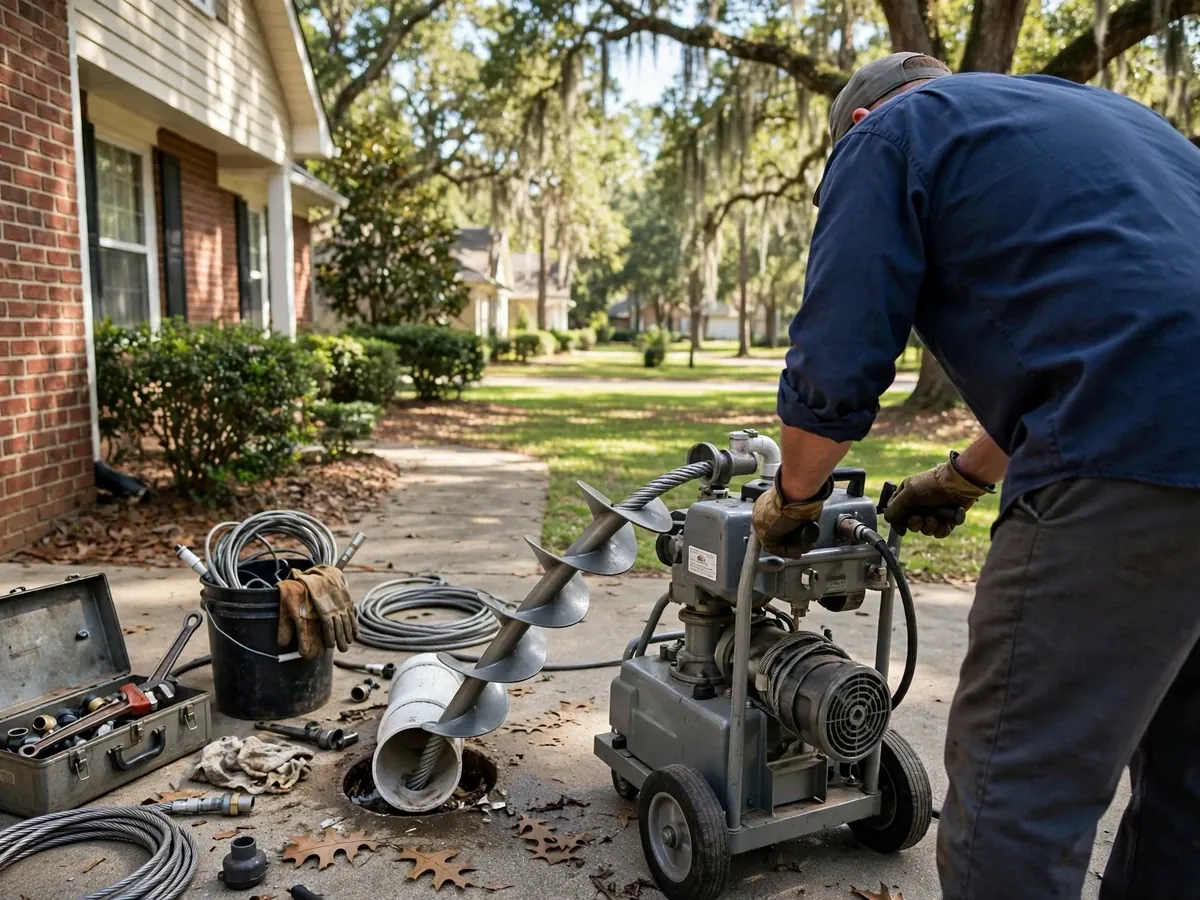
The short answer: cable first, jet if the cable fails, camera if it returns
A cable machine with a cutting head punches through most clogs in minutes. If the blockage is grease or scale, the cable may open only a small channel, and a hydro jet scours the pipe wall. If the clog returns, a camera shows why, and repair becomes the next question.
Which method fits depends on the pipe, the cause and the history. The plumber chooses based on your description and a few tests, and explains the plan before starting.
Cleaning methods compared
Each method has a place.
| Method | Best for | Limits |
|---|---|---|
| Hand auger | A clog in a trap or short branch | Does not reach the main line |
| Cable machine | Roots, wipes and soft debris | May leave grease on the walls |
| Hydro jetting | Grease, scale and roots | Not for fragile or cracked pipe |
| Camera inspection | Repeat clogs, buying a house | Does not clear the clog, only shows it |
Every drain slow at once?
Stop using water and call the 24/7 line.
What to do while you wait
Stop using every fixture. Each flush and each load of laundry adds water to a line that cannot drain. Keep children and pets out of any wet area, and open windows if the smell is strong.
If water is coming up in a basement floor drain, move belongings off the floor and photograph the damage for your insurer before you clean up. Call the 24/7 line and describe where the water is rising.
- Do not pour chemical cleaners down the drain.
- Do not run the washer or dishwasher.
- Keep the area around the cleanout clear.
- Note when the problem started and which fixtures are affected.
Why the clog formed
Grease cools and sticks to pipe walls, wipes do not break down, tree roots enter at joints and old pipe sheds scale. A cleaning treats the symptom. Knowing the cause tells you whether to change habits, schedule maintenance or repair the pipe.
Our sewer line cleaning page describes the service, and our hydro jetting page explains when a jet is better than a cable.
What the visit looks like
A good plumber shows you the result.
- Find the cleanout. The plumber opens the cap and checks for standing water.
- Run the machine. A cutting head or a jet works toward the blockage.
- Test the flow. Water runs through several fixtures to confirm the line is clear.
- Review and recommend. If debris looks like roots or scale, the plumber suggests a camera.
Why you should not keep flushing
When the main line is partly blocked, water drains slowly but still drains. It is tempting to keep using the house and hope it clears. Each flush and each load of laundry adds water that the line cannot handle, and the slow drain becomes a backup into the lowest fixture.
Sewage in a basement is a health hazard and a cleanup bill. Stopping water use the moment you notice several slow drains keeps the line from filling, and the plumber then arrives to a manageable problem instead of a flooded floor.
What the plumber needs from you
Tell the plumber where the cleanout is, if you know. Clear the area around it, and move stored items away from the floor drain. Mention the age of the house, any past root problems and whether previous plumbers used a cable or a jet. That history helps pick the machine.
Let the plumber know if you are on a septic system. A full tank behaves like a main line blockage, but cleaning the line will not help. If the tank is the issue, the plumber says so and points you toward a septic contractor, which saves time and money.
Preventing the next clog
Most main line clogs have a pattern. Grease, wipes, and roots account for a large share, and each has its own prevention. Collect cooking fat in a can, throw wipes in the trash even if the package says flushable, and ask about root control if trees grow near the line.
A cleanout is a useful addition if the house does not have one. It gives the plumber direct access to the line and makes future cleaning cheaper. Ask about it during the visit.
If the camera shows scale or roots, schedule maintenance cleaning at the interval the plumber suggests. A planned visit on a quiet morning costs less than a backup on a holiday weekend.
What a good invoice shows
After the visit, you should receive a note that says what method was used, how far the machine went and what came out. If the plumber used a camera, ask for the footage or a few still images. This record helps if the clog returns, and it helps the next plumber choose a method.
Keep it with your house records so you can see patterns over the years.
Cleaning around the cleanout
Wear gloves when you handle the cleanout cap, and keep children and pets back. A cap under pressure can release wastewater when it is loosened, so let the plumber open it. Afterward, wash the floor with a household disinfectant and let the area dry fully before storing items there again.
Derry notes on sewer service
Not every Derry street is on town sewer. A house on a septic system has a tank and a leach field instead, and a full tank looks like a clogged line. The plumber checks both, and a septic contractor handles the tank.
The Derry code enforcement office at 603-432-6148 can say whether repairs to the sewer lateral need a permit. Call 811 before any digging so utilities are marked.
Sources: derrynh.gov code enforcement. NH 811 requirement.
Nearby coverage
We clear sewer lines in Salem, Londonderry and our other service towns. Restaurants and shops can also ask about scheduled cleaning through our commercial plumbing page.
Frequently asked questions
If several fixtures are slow or gurgling together, the main line is likely. A single slow sink points to a local clog.
For grease and scale, often yes. For a soft clog, a cable is enough. A camera helps pick the right method.
A cable leaves a channel, but not a clean pipe. Grease, roots and scale rebuild the clog. A jet or a repair fixes the cause.
A backup can flood a cellar with sewage. Prompt cleaning limits that risk.
Tell the dispatcher. The plumber checks the house side and the tank outlet, and a septic contractor handles pumping.
Main line cleared, with the cause explained
Call for sewer line cleaning in Derry.