
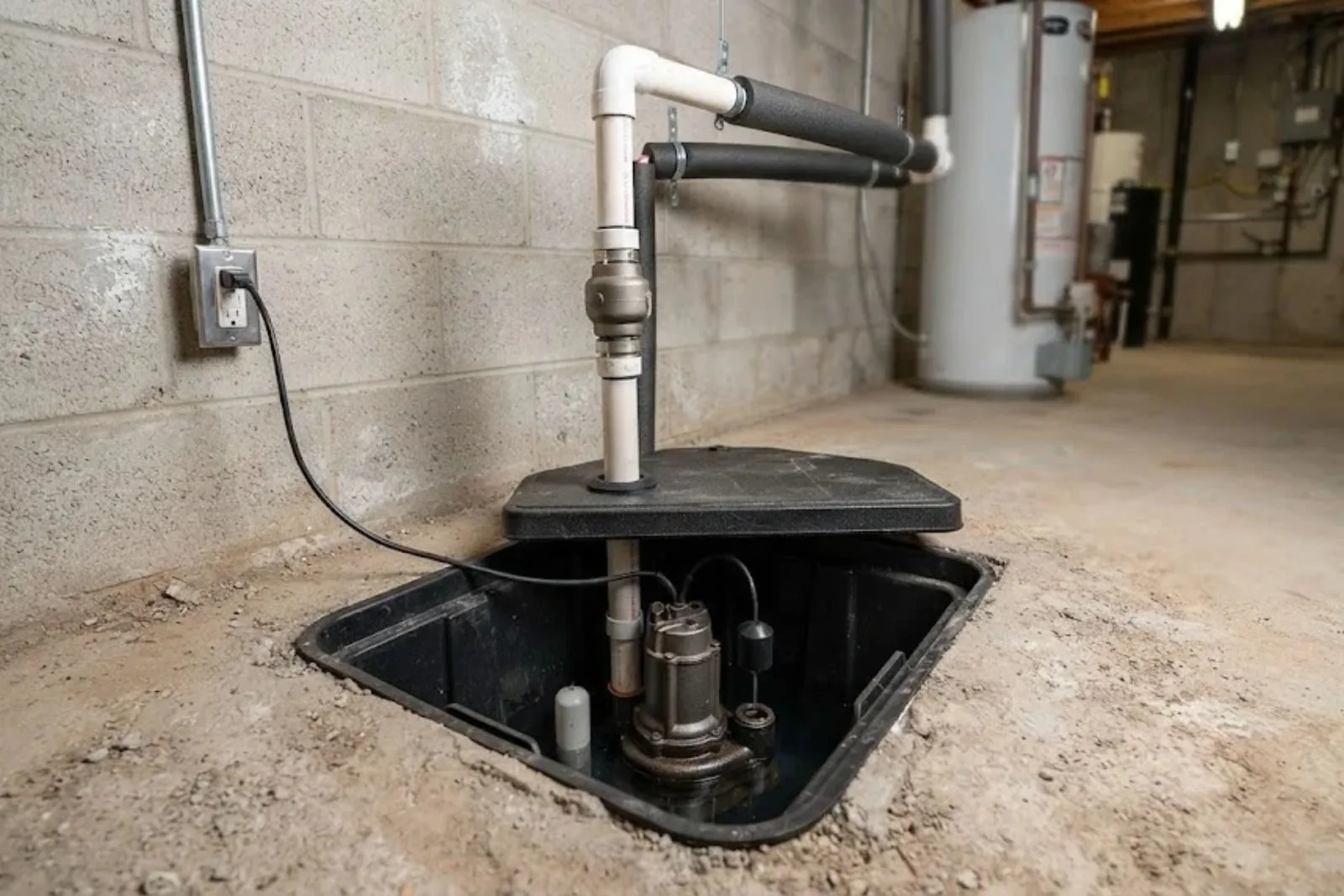
The short answer: the pit and the discharge decide most of the price
A sump pump is the visible part. The price also reflects whether a pit already exists, how thick the floor is, how far the discharge pipe must run and whether you add a backup. Two houses with the same pump can have very different totals. We avoid printing dollar figures here, since they change and depend on the house.
The best way to compare is to ask each contractor for a written scope that lists every item below. A cheap quote that skips the check valve, the backup or the discharge work is not the same job as a thorough one.
Items that change the quote
Ask for each item to be listed.
| Item | What changes it | Why it matters |
|---|---|---|
| Pit | New pit versus an existing one, floor thickness | Cutting concrete takes time |
| Pump type | Submersible or pedestal, motor size | Size must match the water volume |
| Check valve | Quality and position | Prevents backflow into the pit |
| Discharge pipe | Length, trench, wall penetration | Water must end up away from the house |
| Backup | Battery or water-powered | Protects during outages |
| Alarm | High-water alert | Warns before the cellar floods |
| Electrical | Dedicated outlet, GFCI | Safety and reliability |
Comparing sump pump quotes?
Call and ask for the scope item by item.
Pump size and the volume of water
A pump that is too small runs constantly and fails early. A pump that is too large cycles on and off quickly and also wears. The plumber estimates the inflow from the size of the cellar, the soil and how fast the pit fills during rain.
In a quick test, the plumber pours water into the pit and times how fast the pump clears it. For a house with a high water table, a stronger pump or a second pump may be wise. A battery backup adds cost, but a storm outage is when you need the pump most.
What a typical install visit covers
The steps below apply to a new pit.
- Locate the low point. The plumber picks the spot where water collects.
- Cut the floor and dig the pit. A liner is set and the pit is sized for the pump.
- Install the pump, check valve and discharge. The discharge runs outdoors away from the foundation.
- Test, alarm and patch. The pit is filled, the pump is cycled and the floor is repaired.
Where the discharge goes
The discharge pipe should drain well away from the foundation and not onto a neighbor's lot. Ice can block a discharge pipe in winter, so the plumber may add a relief point or an extension. Sump water should not go into a sanitary sewer, and local rules say so.
Pump sizing and the cost of getting it wrong
A pump that is too small runs constantly during storms and may fail from overwork. A pump that is too large fills its pit in seconds and cycles on and off rapidly, which wears the switch. The aim is a pump that clears the pit steadily with comfortable margin during the heaviest rain you expect.
The plumber looks at how often water enters, how deep the pit is and how far the discharge must lift and travel. Lift height and pipe length slow the flow, so a pump rated for a high flow at zero height delivers much less in a real house. Ask for the pump's performance at your height.
Backup options and what they cost you in upkeep
A battery backup keeps a second pump running when power fails. The battery needs checking and replacing on a schedule, and a dead battery gives false comfort. A water-powered backup uses municipal water pressure to run a jet, so it needs no battery, but it is not suited to homes on private wells.
Some homeowners add a generator inlet or a whole-house standby generator. Those cover more than the sump pump, and they cost more. Which fits depends on how long your outages last and how much risk the cellar carries.
Whatever you choose, test it. A backup that has never been tested is a hope, not a plan.
What to expect on a quote visit
A good estimator visits the cellar, looks at the existing pit if there is one and asks how water behaves in storms. They measure the distance to a good discharge point and check for an outlet on a dedicated circuit. Expect questions about past flooding, the age of the house and where the sump discharge will go.
Ask for the quote in writing with each item listed. A written scope lets you compare offers on the same basis, and it protects you if the job changes after work starts.
Ask about the discharge in winter
A discharge pipe can freeze solid in January and force water back into the pit. Ask the plumber how the discharge is graded and protected. A short slope and an open end reduce the risk.
Derry notes on pumps, permits and weather
Derry's code enforcement office at 603-432-6148 can explain whether a permit applies to a new sump system and its discharge. Inspections need 24 hours' notice.
Rockingham County has recorded flood or storm declarations in May 2006, April 2007, July 2008 and March 2010, along with Tropical Storm Irene from August 26 to September 6, 2011, according to the regional planning commission. A winter ice storm declaration dates to January 7, 1998. These are county events, and they are why backup power matters for sump pumps.
Sources: derrynh.gov code enforcement. Rockingham Planning Commission regional plan.
Related pages and towns
Our sump pump installation and repair page describes the service. Homes in Chester and Windham on wells should also tell the plumber, since the electrical load is shared.
Frequently asked questions
If your cellar floods when power goes out, yes. It is one of the most useful additions to a sump system.
Many installs take a day, including floor repair. A long discharge run or hard floor adds time.
Scope. Check the pit, check valve, discharge, backup and electrical items on each quote.
Often yes, if it is in good shape and the right size. The plumber inspects it.
It can, especially for the discharge. Call code enforcement at 603-432-6148 or ask the plumber.
Be ready before the next storm
Call for sump pump installation in Derry.