
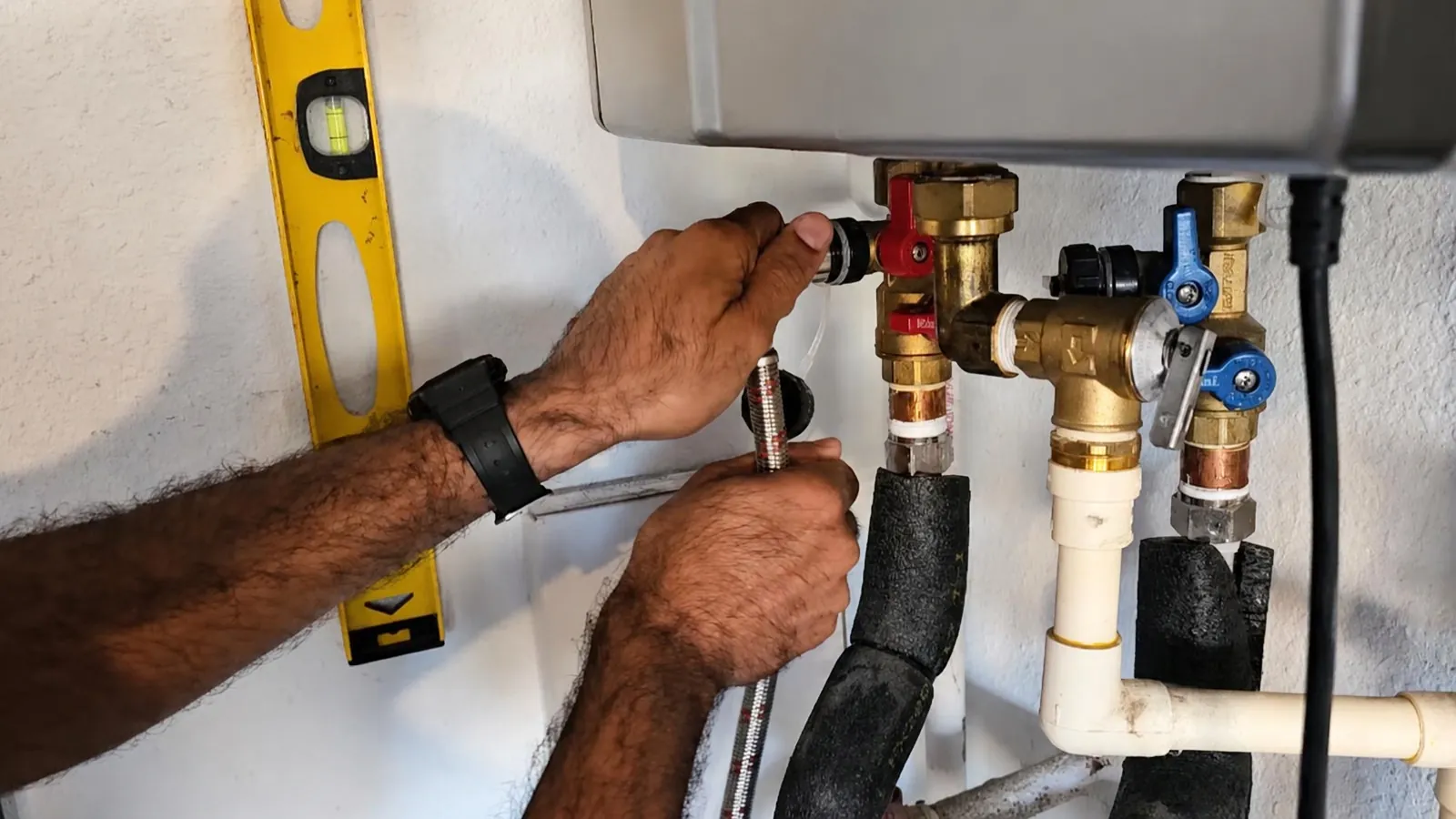
The short answer: great for one sink, wrong for a whole house
An under-sink tankless heater, also called a point-of-use unit, heats water for a single faucet or a small group. It sits in the cabinet and uses electricity, so there is no vent or gas line. Hot water arrives quickly because the heater is a few feet from the tap, and the long wait for the main heater's water disappears.
The tradeoff is capacity. A small unit can heat a trickle to a modest temperature rise, which suits a hand sink or a bar sink. It cannot run a shower. Winter inlet water is colder in New Hampshire, so output at a given flow is lower than the label suggests.
Point-of-use heater or other options
Pick the tool that matches the problem.
| Problem | Under-sink heater | Alternative |
|---|---|---|
| Long wait at a distant bathroom sink | Good fit | Recirculation loop |
| Kitchen sink waits too long | Good fit | Move the main heater closer, if possible |
| Hot water runs out in showers | Not a fit | Larger tank or whole-house tankless |
| No space in a vanity cabinet | May not fit | Wall-mounted unit nearby |
Waiting forever for hot water?
Call and the plumber can check the pipe run.
Electrical and installation needs
Most compact units need a dedicated circuit, and some draw enough current to need a larger breaker. A cabinet must have room for the unit, the wiring and the water connections. The plumber also installs shutoff valves so the unit can be isolated for service.
Water quality matters even for a small heater. Scale builds fast in a small heat exchanger, and a unit on well water with high hardness can lose output sooner than expected. A sediment filter ahead of the unit helps in some homes.
What to do before you buy
A few minutes of checking prevents returns.
- Measure the wait. Time how long hot water takes to arrive at the sink.
- Check the cabinet. Measure depth, width and electrical access.
- Ask about the main heater. A failing main heater or an undersized pipe may be the real cause of the wait.
- Talk to the plumber. A short visit can confirm the circuit and water connections.
When a recirculation line is smarter
If several fixtures wait a long time, a recirculating pump on the main heater serves them all. It keeps hot water moving in the pipe so the wait shrinks everywhere. A recirculation system uses electricity to run the pump and wastes some heat, so it suits homes with distant bathrooms.
Our tankless water heater page covers whole-house units, and the water heater installation page covers the planned route for a larger change.
Where a point-of-use heater earns its place
A point-of-use heater is a good answer when one fixture sits a long way from the main heater. A bathroom at the far end of a ranch house, a kitchen sink on the opposite side from the water heater or a workshop sink in a garage are typical cases. The unit saves the wait and the wasted water.
It is a poor answer when the real problem is the main heater. If every fixture runs out of hot water, a small unit under one sink will not help the others. Look at the whole system first and treat the biggest source of waiting.
Safety and service notes
Any electric heater in a cabinet needs a wiring method that suits the location, and the connection to the water must have a shutoff valve and a relief path where the manufacturer requires one. Cabinet shelves get moved and bottles get stored, so keep the area around the unit clear for ventilation and service.
Mineral scale is the main service issue in small units. If the flow drops or the water turns cooler than it used to, the heating chamber may be scaling up. Many units allow a vinegar flush through the isolation valves, and the plumber can show you how.
Questions to settle before you buy
Check the voltage and amperage the unit needs and whether the cabinet circuit can supply it. Read the flow rate and temperature rise ratings, and compare them with your coldest winter water. Make sure the unit fits the cabinet with room for the connections and a shutoff.
Ask whether the manufacturer allows installation in a cabinet and what clearance it requires. Keep the manual and warranty card, and note the date of installation so you can plan the first flush.
Alternatives worth a quick look
A hot water recirculation pump on the main heater serves every fixture instead of one. A small point-of-use tank under a sink stores a few gallons, which can help a bar sink or a laundry tub. Each has costs and limits. A plumber can compare them for your house in a short visit.
If the wait is the only complaint, moving or insulating the long pipe run may help as well.
Cost of ownership in plain terms
A small unit costs less to buy than a whole-house heater, and it uses electricity only when the tap runs. The tradeoff is the circuit and the occasional flush. Ask the plumber what a typical flush involves, and add the time to your household routine.
Derry notes before you add a heater
Derry's code enforcement office at 603-432-6148 can say whether electrical or plumbing work for a small heater needs a permit. Electrical work in New Hampshire is a licensed trade, so ask who will handle the circuit.
The Derry Water Department at 603-432-6147 can tell you what it reports about your supply if you are on town water. Homes on private wells should rely on a test, because the state recommends testing hardness, iron, manganese and other items every few years.
Sources: derrynh.gov code enforcement and water department pages. NH DHHS and NHDES private well testing brochure.
Related towns
Customers in Londonderry and Chester ask the same question, and the answer depends on the pipe run from the main heater.
Frequently asked questions
Electric point-of-use units do not need venting. Gas units do and are not made in under-sink sizes.
Small units are meant for one fixture. Check the flow rating, and expect lower output in winter.
It can avoid running water down the drain while waiting, but the unit uses electricity. The plumber does not promise a specific amount.
It varies by brand and water quality. Scale and sediment are the main enemies.
It depends on your supply. Ask the water department what it reports, and consider a filter if you are on a well.
Instant hot water at the sink
Call to ask about a point-of-use heater in Derry.